Deuteronomy 27
May 26, Year 1
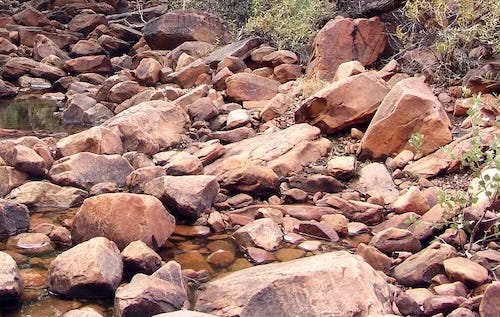
[5-6] And there you shall build an altar to the LORD your God, an altar of stones. You shall wield no iron tool on them; you shall build an altar to the LORD your God of uncut stones….
To understand the symbolism we need to return to the antithesis of Babel/Babylon and Salem/Jerusalem—cities at spiritual enmity, from Genesis to Revelation.
The Tower of Babel is the perennial symbol human pride and technology.
“Come, let us make bricks, and burn them thoroughly,” using “brick instead of stone” to construct their tower.
It is a tower “with its top in the heavens” in order “to make a name for ourselves….”
It is a ziggurat, an attempted “ladder to heaven.”
(As are Egyptian pyramids, and Aztec teocallis, and….)
God thwarts it, in his mercy, for the good of humankind.
But the altar prescribed here by God is made of “uncut [lit. “whole”] stones.”
The Hebrew root for “uncut” is š-l-m—the same as for “Salem” and “Jerusalem,” and “shalom” or “peace.”
The stones are the handiwork of God, not of human hands or merit.
The altar prescribed for the Tabernacle symbolizes the mountain, as often noted.
This altar too is a microcosm of the mountain where it sits:
The written-in-stone proclamation of the law at Mount Sinai, and here again at Mount Ebal, stands in stark contrast with Babel’s confusion of tongues, and the chaos of Egyptian polytheism.
God often calls his people to approach heaven, symbolically, by way of (God-made!) mountains.
It’s all about God’s provision, rather than human means and presumption.