

Numbers 21
April 24, Year 1
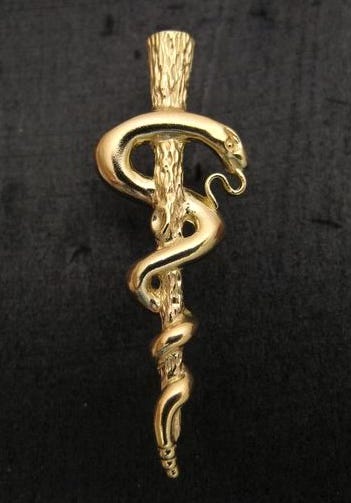
[9] So Moses made a bronze serpent and set it on a pole. And if a serpent bit anyone, he would look at the bronze serpent and live.
Although among the most well-known symbols in the Bible, this one illustrates the challenges of interpretation.
How does this thing heal when the snake-bitten people looked at it? That is, what is its meaning, the truth revealed in the bronze serpent, precisely?
But then, how exactly does Christ’s death in being “lifted up,” just like this serpent, save us?
Ultimately, because we trust God and it just does, even if we fail to grasp fully its meaning and truth. Theologians still labor to explain it.
But let’s try to say more.
Because even Israel later misunderstood it: Eventually King Hezekiah had to destroy this object, because they started burning incense to it! (2 Kings 18:4)
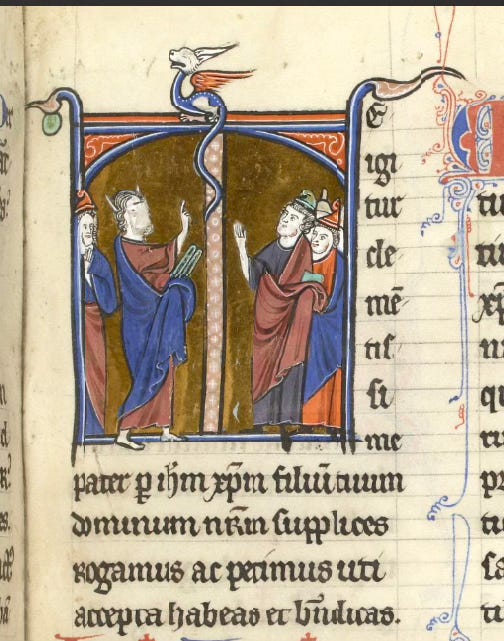
The “fiery serpents” are dragons. (See image below.)
Whatever we call them, that is the symbolism—the serpent, Leviathan, Rahab the Sea Monster, the Nile, the dragon, on and on. (See Revelation 12.)
In straying from God, the people wander into the vipers’ nest.
The bronze serpent is made in the likeness of a fiery serpent.
It represents their sin, as reminder and a consequence, and of their need for repentance.
The likeness is an inert object—fixed, neutralized, displayed on the pole.
It reminds them to look to God for healing. (It does not heal.1)
God removes the sting, the poison. God heals. God restores.
It is a test of faith and obedience. (See the person on the left below, turning away, rejecting this provision.)
Jewish devotional commentary called it “a symbol of salvation; for he that turned himself toward it was not saved by the thing that he saw, but by You, the Savior of all.” (Wisdom 16:6; emphasis mine.)
And yet that is inadequate. We are meant to ponder and wonder.
All physicians with a right-sized understanding of themselves will acknowledge that they treat, but don’t heal. Only God heals, by many means.