

Exodus 15
March 8, Year 1
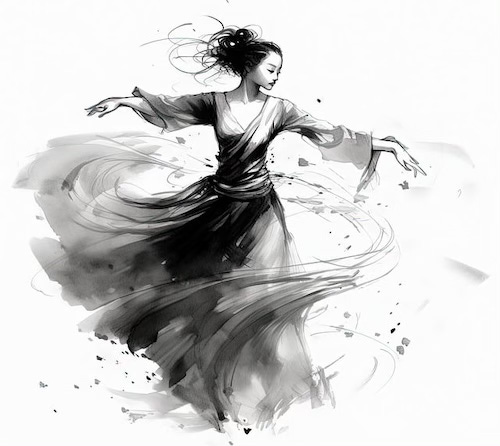
[20-21] Then Miriam the prophetess, the sister of Aaron, took a tambourine in her hand, and all the women went out after her with tambourines and dancing. And Miriam sang to them:
“Sing to the LORD, for he has triumphed gloriously;
the horse and his rider he has thrown into the sea.”
This is the first instance of tambourines/timbrels, dancing, and singing in the Bible.1
These all anticipate Sabbath, the seventh day (mentioned explicitly in the next chapter):
They are all in stark contrast to their slavery in the construction of bricks—six-sided constructions of earth.
They participate in heaven—all are “round.”
The tambourines/timbrels (toph) were like our own—round, drum-like percussion instruments.
With round-and-round rhythms that mark the domain of time rather than space.
Whirling in dance, dizzyingly, in ecstasy, as in intoxication and dreaming and sleep/rest.
Singing in indefinitely-repeating choruses.
Pointlessness—as a good thing! In both senses:
Round and round
For no utilitarian purpose other than celebration to God!
Wonder and reflection and irrationality—as a good thing!—in this ecstatic moment of worship.
Moses writes his song, but it is Miriam and the women who dance, beat the instruments, and sing—symbolically, earth reflecting heaven!

Laban complains that Jacob tricked him in fleeing rather than celebrating with these manifestations, in a similar escape from servitude, a prelude and fractal iteration of this one.